Best Oil for Wood: Top Finishes for Durable, Beautiful Wood
Choosing the right oil finish protects wood while highlighting grain and character. This guide reviews five top oils, spanning tung oil, boiled linseed oil, and food-grade mineral oil, to help you pick the best option for indoor furniture, cutting boards, and high-use woodwork. Each product is evaluated for penetration, durability, food safety, and ease of application, with practical tips for reconditioning and maintenance.
| Product | Brand | Oil Type | Best Use |
|---|---|---|---|
| Tried & True Original Wood Finish | Tried & True | Linseed Oil & Beeswax Blend | All Woodwork; Durable; Indoor Safe |
| HOPE’S 100% Pure Tung Oil | HOPE’S | Tung Oil | Indoor/Outdoor Wood Finishes; Deep Penetration |
| LinSheen Boiled Linseed Oil | LinSheen | Boiled Linseed Oil | Condition & Restore Wood |
| Kate Naturals Mineral Oil For Wood | Kate Naturals | Food Grade Mineral Oil | Cutting Boards; Butcher Blocks |
| OAIEGSD 32 Oz Pure Tung Oil | OAIEGSD | Tung Oil | Waterproof Sealing; Indoor & Outdoor Wood |
Tried & True Original Wood Finish

Tried & True Original Wood Finish blends linseed oil with beeswax to deliver a warm, natural appearance while protecting wood from water and daily wear. The formula is polymerized for fast curing and contains no solvents, reducing indoor application risks and making it safe for spaces without extensive ventilation. This finish creates a soft, satin sheen that enhances grain without forming a thick film, and repairs are straightforward—reapplication can refresh worn areas without stripping the surface. The combination of oil and wax offers durability with easy maintenance, supporting long-lasting woodcare for furniture and cabinetry.
Because the finish is designed to be touch-up friendly, owners can preserve the original look over years of use. It’s particularly suited for heirloom pieces where maintaining a natural look matters as much as protection. When fully cured, the product is compatible with food-safe expectations for incidental contact, making it a practical choice for dining room tables and wooden toys where safety is a priority.
HOPE’S 100% Pure Tung Oil

HOPE’S 100% Pure Tung Oil is a natural finish well-regarded by woodworkers for the ultimate hand-rubbed look. The oil penetrates deeply into wood fibers rather than forming a surface film, resulting in a flexible, non-oily solid that becomes part of the wood. It cures at room temperature and does not require complex solvents, making indoor application straightforward. Tung oil provides robust moisture resistance and wears well against alcohol, oil, and daily use, often lasting longer than mineral oil or wax-based products. This makes it a durable choice for furniture, turnings, and high-use tabletops where a refined, durable finish is desired.
As it penetrates rather than coats, tung oil enhances depth and warmth without obscuring grain. Regular maintenance typically involves light recoats over time to maintain luster and protection. While excellent indoors, outdoor exposure may necessitate additional sealing or periodic reapplication to sustain long-term performance against the elements.
LinSheen Boiled Linseed Oil
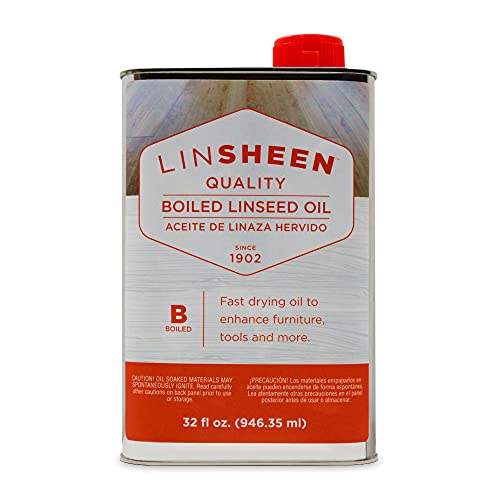
LinSheen Boiled Linseed Oil provides a clear wood finish that enriches grain color and texture. Boiled linseed oil is designed to absorb into the wood’s grain, condition the surface, and restore durability. The boiled variant includes drying solvents that speed up the drying process compared to raw linseed oil, allowing for quicker project progress. This finish yields a warm, natural look with a subtle sheen and is suitable for indoor furniture, floors, and other wood items that benefit from enhanced color and depth.
Understanding the difference between boiled and raw linseed oil helps with expectations: boiled linseed dries faster and delivers practical results for projects with tight timelines, while raw linseed oil dries slowly but can offer a more traditional appearance. Application typically involves multiple coats with adequate curing time between layers to achieve optimal hardness and protection.
Kate Naturals Mineral Oil For Wood

Kate Naturals Mineral Oil is a food-grade mineral oil designed for wood cutting boards, butcher blocks, and utensils. It is colorless, odorless, tasteless, and unscented, making it ideal for kitchen applications where flavor preservation and safety are critical. Mineral oil does not polymerize; instead, it conditions and protects by seeping into wood pores, helping prevent cracking and drying. This oil is typically used as a regular maintenance product to refresh wood countertops and boards, especially where exposed surfaces meet food contact.
Because it remains a penetrating oil rather than a surface film, frequent reapplication is common for high-use items. It is compatible with pantry-resafe surfaces in homes and food service settings, and it works well as part of a regular maintenance routine to extend the life of wooden cutting surfaces without altering appearance dramatically.
OAIEGSD 32 Oz Pure Tung Oil Sealer
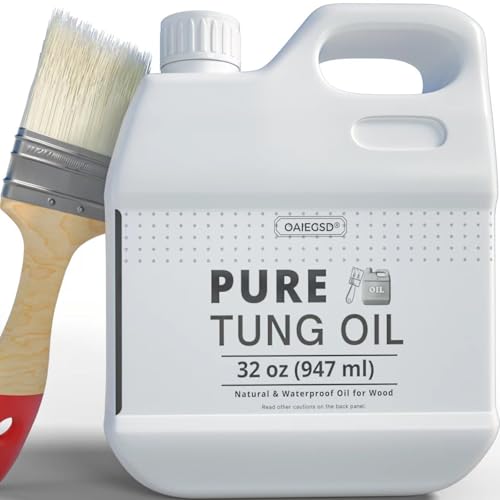
This 32-ounce tung oil offering emphasizes waterproofing and deep penetration, sealing unfinished wood with a lustrous, durable finish. The product includes a dedicated brush as a bonus, making application on large surfaces easier and more uniform. Tung oil sealer provides a resilient barrier against moisture while preserving the natural warmth and depth of the wood grain. It is suitable for cutting boards, outdoor furniture, butcher blocks, and other bare wood surfaces that benefit from long-lasting protection and a refined look.
As with other tung oil products, proper curing and multiple thin coats yield the best results. The included brush helps achieve even coverage, reducing streaks and blotching on open-pored woods. This option is particularly attractive for projects where a strong, water-resistant finish is desired without adding a heavy film layer.
Buying Guide
- Oil type and penetration: Determine whether you want a penetrating oil (tung oil, boiled linseed oil, mineral oil) that soaks into the wood or a film-forming finish that sits on the surface. Penetrating oils tend to enhance warmth and depth, while film-forming options can offer a solid, uniform surface with a more protective layer.
- Food safety vs general woodworking: For cutting boards, utensils, or countertops, choose food-grade mineral oil or tung oil that cures into a safe surface. For furniture and indoor pieces not in contact with food, non-food-grade finishes may be appropriate if they offer superior durability or ease of maintenance.
- Indoor vs outdoor use: Some oils are optimized for indoor environments with less moisture exposure, while others are formulated to withstand outdoor humidity and weather. Outdoor-ready finishes may require more frequent reapplication and periodic maintenance.
- Drying and cure times: Boiled linseed oil dries faster than raw linseed oil, speeding up project timelines. Tung oil also requires multiple coats and proper curing time to achieve full hardness and moisture resistance. Consider your schedule and room conditions when planning applications.
- Maintenance and reapplication: Some finishes allow easy spot repair or touch-ups, while others may require full sanding before reapplication. A finish that supports maintenance without stripping is advantageous for high-use pieces.
- Sheen and color impact: Oil finishes can deepen wood color and grain. If you prefer a natural, warm look, choose oils with minimal amber tone. For a more pronounced satin or gloss, plan for additional coats or a topcoat after oil curing.
- Application tools: Some products include brushes or come with user-friendly applicators, making it easier to achieve an even result on large surfaces. Rag, lint-free cloth, or a brush are common application methods depending on the product.
- Availability and price: Availability varies by brand and size. Compare multiple products to balance upfront cost with long-term durability and maintenance needs.
- Environmental and health considerations: Look for products with low-VOC formulations and minimal toxic additives if indoor air quality is a priority. Reading safety data sheets can help inform decisions for homes with sensitive occupants.
Choosing the best oil for wood depends on the project type, usage conditions, and maintenance plans. For natural wood appearances and easy touch-ups, finishes like Tried & True and LinSheen offer a warm, repairable look. For cutting surfaces and kitchenware, food-grade mineral oil or tung oil products provide safe, durable protection. If you need a robust, waterproof seal for outdoor wood, tung oil sealers with extended cure times and proper application practices can deliver lasting performance. Balancing penetration, durability, and safety will guide you to the most suitable finish for your woodworking goals.