Best Heaters for Unfinished Basements: Efficient, Safe, and Space-Saving
Unfinished basements often stay colder than the rest of the house, creating drafty corners and chilly workspaces. The right heater can deliver targeted warmth without cluttering limited floorspace. This guide highlights five reliable options designed for basements and other unfinished spaces, focusing on safety, ease of use, and energy efficiency. We compare infrared models that heat objects and people directly with portable and wall-mounted designs that fit tight spaces. Read on to find practical choices that balance performance with budget and safety considerations for American homes.
| Product | Brand | Type | Key Feature |
|---|---|---|---|
| Heat Storm HS-1500-PHX-WIFI Infrared Heater | Heat Storm | Wall Mounted Infrared | Wi-Fi control and space-saving design |
| Dr Infrared Heater Portable Space Heater, Original, 1500-Watt | DR. INFRARED HEATER | Portable Infrared Space Heater | Large-room heating with auto energy saving |
| Lifeplus 1500W Infrared Space Heater | LifePlus | Infrared Cabinet Heater | Three heat settings with timer and remote |
| Dura Heat EUH1465 Electric Forced Air Heater | Dura Heat | Forced Air Heater | Pivoting base for flexible placement |
| BEYOND HEAT Milkhouse Space Heater | BEYOND HEAT | Compact Electric Space Heater | Three heat settings with safety features |
The following five models were selected for their suitability in unfinished basements: wall-mounted infrared options save floor space where walls remain underutilized; portable infrared units provide flexible, quick warmth; and compact electric heaters with safety shutoffs suit small to medium basement rooms. Each product section below presents a concise overview, key features pulled directly from the product listings, and practical notes for basement use.
Heat Storm Infrared Wall Heater With Wi-Fi

The Heat Storm HS-1500-PHX-WIFI is a compact infrared unit designed for wall mounting, which helps keep basement floors clear for storage or workshop space. ItsWi‑Fi capability lets you adjust temperature from a phone, an essential feature for changing basement conditions without climbing stairs. The unit includes a remote control and a touch-screen digital thermostat for quick manual adjustments. A built-in tip-over safety shutoff adds a crucial layer of protection in busy basements where cords and items may be moved around. This heater is well-suited for bedrooms, kitchens, offices, and other zones that need controlled warmth without occupying floor space.
- Wall-mounted, space-saving design
- Wi-Fi enabled with remote control
- Touchscreen digital thermostat
- Tip-over safety shutoff
In terms of basement practicality, the Heat Storm unit is a steady infrared option that heats objects and people directly rather than circulating air. This can feel more efficient in drafty unfinished spaces where warm air may escape through cracks. The smart features add convenience for maintenance and energy management, especially if you want to warm a defined area like a workshop or a small finished area adjacent to the basement stairs. Ensure you have a suitable wall outlet and a secure mounting surface for reliable operation.
Dr Infrared Heater Portable 1500W Space Heater

The Dr Infrared Heater Portable Space Heater delivers robust warmth for larger basements using a dual heating system that combines infrared quartz tubing with a PTC element. This configuration is designed to deliver more consistent heat with a target of around 5200 BTU, making it suitable for mid-sized unfinished spaces. It includes an infrared remote, a 12-hour timer, and a quiet blower rated at about 39 dB, minimizing disturbance in work areas. The unit also features safety protections like tip-over and overheat shutoffs, which are essential in basements where airflow can be inconsistent.
- Infrared quartz tube + PTC heating
- Auto energy-saving mode with high/low settings
- Tip-over and overheat protection
- Remote control and long runtime timer
For basement use, this portable heater is a versatile choice when you need quick, even warmth in a larger space or during chilly work sessions. Position it away from moisture sources and ensure cords are managed to prevent tripping. While portable, it still benefits from a power outlet with sufficient amperage to support 1500 watts. This makes it a strong option for unfinished basements that function as workshops or laundry areas where flexible heating is a plus.
Lifeplus 1500W Infrared Space Heater
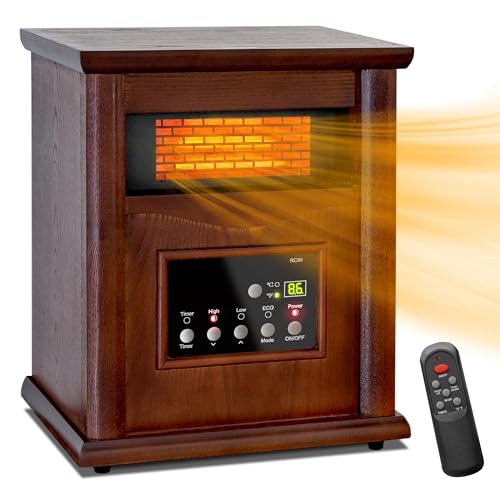
The LifePlus 1500W infrared heater uses infrared quartz cabinet elements and offers three heat settings (high, low, eco) to modulate warmth in basements with varying insulation. It features an LED digital screen and an adjustable thermostat for precise temperature control, helping maintain comfort without overheating. The unit includes automatic safety shutoff in the event of overheating and a tip-over switch to prevent hazards if bumped during basement activity. It is positioned as a practical choice for large rooms in unfinished spaces and for basements used as studios or hobby rooms.
- Three heat settings (high, low, eco)
- LED digital display with adjustable thermostat
- Automatic shutoff on overheating; tip-over protection
Basement environments can vary in humidity and layout, so infrared heating can be advantageous because it warms occupants and objects directly rather than relying solely on circulating air. The LifePlus model emphasizes a quiet, controlled experience with a timer option, making it suitable for long basement sessions, late-night projects, or living space conversions where consistent warmth is desired without loud operation.
Dura Heat Pivoting Base Electric Heater
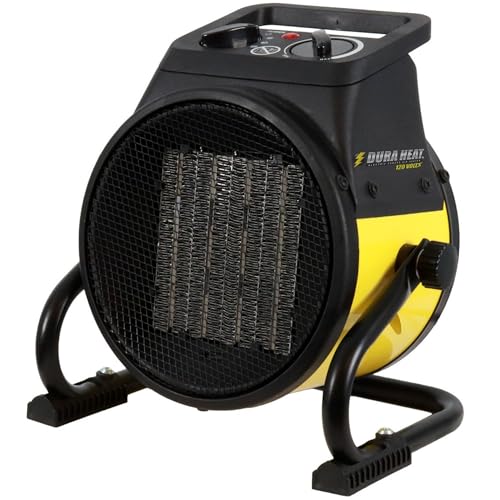
The Dura Heat EUH1465 electric heater provides 1500 watts of PTC ceramic heating, designed for quick warmth in smaller spaces. Its rugged steel construction enhances durability for workshop or garage environments, and its pivoting base allows flexible placement to direct warmth toward areas in need. This unit supports versatile heating options, offering both heat and fan-only settings for different seasons and tasks. In unfinished basements used as hobby areas or storage rooms, this heater can offer quick heat when needed without heavy equipment or installation.
- 1500W PTC ceramic heating
- Rugged steel construction
- Heat and fan-only settings
For basement use, the pivoting base is a practical feature, enabling you to direct warmth toward workbenches, storage nooks, or open floor areas. Because it is a forced-air heater, it can move air more actively than infrared units, which is beneficial in drafty basement layouts. Remember to ensure proper clearance around the unit and avoid moisture exposure that could shorten its life. This model can serve as a reliable, budget-conscious option for occasional heating in smaller unfinished spaces.
BEYOND HEAT Milkhouse Space Heater

The BEYOND HEAT Milkhouse space heater offers compact, 1300W/1500W operation with three heat settings and a thermostat to maintain a steady temperature. It includes safety features like a tip-over switch and automatic overheat protection, making it a practical choice for basements that are used as workshops, home garages, or small living spaces. The heater is built with durable construction and has ETL certification for safety assurance. Its smaller footprint makes it easy to position near work areas or under shelving without crowding the room.
- Three heat settings with thermostat
- Tip-over and automatic overheat protection
- Compact, durable design with ETL certification
In an unfinished basement, this Milkhouse heater provides targeted warmth without dominating the space. The 1300W setting offers energy-conscious operation, and the 1500W setting delivers stronger heat for colder days. For basements that double as hobby rooms, garages, or storage areas, this model provides practical warmth with safety features that help prevent common hazards in busy spaces. Consider pairing with a dehumidifier or proper ventilation to maintain comfortable humidity levels while using electric heating.
Buying Guide
Key Considerations For Basements
Basements often present unique challenges: higher humidity, uneven insulation, and limited natural light. When choosing a heater for unfinished spaces, prioritize safety features such as tip-over protection, overheat protection, and sturdy construction. Infrared heaters can be especially effective in basements because they warm people and objects directly, which can feel more efficient in drafty environments. Portable units offer flexibility for workshops or laundry areas, while wall-mounted models save floor space in smaller rooms.
Heat Type And Coverage
Infrared heaters deliver radiant warmth that feels similar to sunlight, which can be ideal for basements with cold floors and concrete walls. They heat objects rather than simply heating air, which can reduce heat loss through drafts. Forced-air heaters quickly raise air temperature in small rooms but may circulate dust or moisture more than infrared units. For larger unfinished spaces, look for models with adequate wattage (around 1500W) or BTU equivalents and consider whether you need oscillation or directional control to cover open layouts.
Safety, Control, And Convenience
Several practical safeguards improve basement usability: tip-over switches, automatic shutoffs on overheating, and durable housings. For convenience, consider models with remote control, digital thermostats, and, if possible, Wi-Fi or app-based control for adjusting heat from across the house. Quiet operation is important for basements used as living spaces or home offices. A programmable timer can also help manage energy use during the night or when rooms are not in use.
Power Requirements And Installation
Most residential basements rely on standard 120V wiring, which limits continuous heater output to roughly 1500W. If you anticipate needing more heat for very large basement areas, you may require a dedicated circuit or a professional installation for higher-power units. Wall-mounted infrared heaters require a secure mounting point and proper clearance from walls and furnishings. Portable heaters need stable positioning away from flammable materials and moisture sources. Always follow manufacturer installation instructions and local electrical codes for safety and compliance.
Durability, Maintenance, And Costs
Durability matters in basements where moisture and temperature fluctuations are common. Look for units with protective housings, sealed cords, and ETL or UL listings. Routine maintenance includes periodic cleaning of grills and ensuring remote or digital controls remain responsive. While prices vary, investing in a heater with strong safety features and reliable output can save energy costs over time by maintaining comfort efficiently. For basement use, prioritize models with smart or programmable features that help manage warmth without overspending on electricity.
In summary, the best heater for an unfinished basement balances heat output, space considerations, and safety. Wall-mounted infrared units like the Heat Storm offer space efficiency and smart controls, while portable infrared heaters from Dr Infrared and Lifeplus provide robust warmth for larger or irregular layouts. For versatile placement, Dura Heat’s pivoting base and BEYOND HEAT Milkhouse’s compact design provide practical options for workshops, garages, and living spaces in unfinished basements. When selecting a model, weigh how you plan to use the space, the level of insulation, and your preferred control features to arrive at an effective, safe solution.