Best Grill Brush for Cast Iron: Safe, Bristle-Free Cleaning Tools
Finding the best grill brush for cast iron protects seasoning, prevents scratches, and keeps grills clean without metal bristles ending up in your food. This guide spotlights five bristle-free brushes that perform well on cast iron, stainless steel, and porcelain-coated grates. Each pick emphasizes safe cleaning, heat tolerance, and durable construction. The following table offers a quick glance at brands and names to help you compare, followed by in-depth product sections with key features, plus a practical buying guide to help you choose the right tool for your grilling setup.
| Product | Brand |
|---|---|
| MEKER Bristle Free Grill Brush | MEKER |
| GRILLART Bristle Free Grill Brush & Scraper | Weetiee |
| Kona Safe/Clean Bristle Free Grill Brush | Kona |
| Grill Rescue Bristle Free Head | Grill Rescue |
| XUDAKAIXIN Bristle Free Grill Brush | XUDAKAIXIN |
MEKER Bristle Free Grill Brush
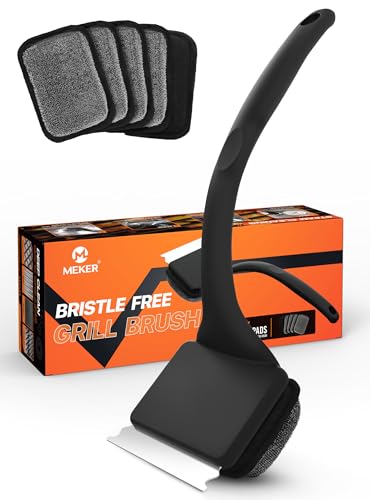
MEKER’s bristle-free design centers on safety and simple maintenance. The brush uses a flexible steel-fiber woven layer with a replaceable cleaning pad, eliminating the risk of loose metal bristles entering food. The pad attaches securely with an eight-screw locking system, keeping the cleaning surface stable during long grilling sessions. This setup is especially appealing for cast iron grates, where preserving seasoning matters while still delivering effective removal of baked-on grease. The kit’s replacement pads extend the life of the tool and reduce ongoing costs.
In use, the bristle-free approach makes light scrubbing and normal steam-assisted cleaning effective on cast iron and stainless steel. The pad design minimizes scratching on seasoned surfaces and supports even buildup removal across flat and ribbed sections. For best results, allow a cool-down period after heavy use before swapping pads, and follow guidance to replace the pad when it begins to show wear. The overall design emphasizes safety and durability for regular outdoor grilling sessions.
GRILLART Bristle Free Grill Brush & Scraper

This GRILLART design emphasizes a safe, bristle-free experience with an integrated wide scraper. The absence of wire bristles reduces the risk of bristle fragments ending up in food, which is especially important when cleaning cast iron, porcelain, or stainless-steel grates. The brush uses a 18-inch length to reach hard-to-clean areas around the grill, and it includes a robust scraping edge to tackle persistent residue in a single pass. Its 125% more flexible upgraded helix improves access to the sides and corners of grates.
Attachment and maintenance are improved with a stronger adhesive system that keeps the replaceable cleaning head firmly on the handle, even during vigorous scrubbing. The design is compatible with a variety of grill styles—gas, charcoal, porcelain, and Weber models—making it a versatile choice for cast iron enthusiasts who want reliable performance without metal bristles. As with all bristle-free tools, users should apply controlled pressure and avoid soaking the head for extended periods to protect the adhesive and the pad.
Kona Safe/Clean Bristle Free Brush

Kona’s bristle-free design targets all grill types, including porcelain-coated and cast iron, with a focus on durability and safe cleaning. The brush emphasizes long-lasting rigidity—claimed to be 125% more rigid than conventional brushes—to resist fraying or bending, reducing risk of bristle loss. It’s built with rust-resistant stainless steel components and has been designed and tested in the USA for reliability. Kona notes compatibility with a wide range of grills while cautioning that small portable grills or very thin round stainless grates may not be ideal matches.
For cast iron, Kona’s approach helps protect seasoning by avoiding harsh abrasive actions that could strip protective layers. Use a light touch, particularly on seasoned surfaces, and follow standard cleaning practices after heating the grill to loosen residue. The brush’s universal compatibility makes it a solid choice when you regularly switch between charcoal, gas, and ceramic grates, while still prioritizing safety and durability during post-cook cleanup.
Grill Rescue Bristle Free Head

Grill Rescue offers a bristle-free head designed for safe and durable cleaning on cast iron and stainless-steel grates. The cleaning head uses high-temperature Aramid fiber to deliver heat resistance up to around 600°F, making it suitable for cleaning hot grills. Its steam-cleaning approach simplifies residue removal: heat the grill, dip the brush in water, and let the steam loosen grease and baked-on grime. The head is replaceable, extending the tool’s life, and the system is designed to perform across gas, charcoal, porcelain, and other grill types.
Users benefit from an easy maintenance cycle: heat, steam, wipe, and repeat. The bristle-free design lowers the risk of foreign particles mixing with food, while the head’s durability supports heavy use during peak grilling seasons. When cleaning cast iron, follow best practices to preserve seasoning and avoid overly aggressive scrubbing that could wear down surfaces over time.
XUDAKAIXIN Bristle Free Grill Brush

XUDAKAIXIN’s Bristle Free Grill Brush uses a steam-driven cleaning core with a patented foam design to activate cleaning power without metal bristles. The long stainless steel handle is designed to resist bending and keep hands away from heat, which is especially helpful when cleaning cast iron and other hot grill surfaces. The steam-activated cleaning method is marketed as fast and efficient, with claims of safe operation on various grill styles, including cast iron, stainless steel, porcelain, and flat-top griddles. The replaceable head adds value for long-term use.
The design emphasizes safety and ease of use for outdoor grilling. The steam mechanism helps lift and remove stubborn residues with minimal scrubbing, reducing the chance of damaging cast iron seasoning. For best results, practice gentle pressure and thorough drying after cleaning to prevent rust and maintain the grates’ seasoned finish.
Buying Guide
Key purchase considerations for a cast-iron grill brush include safety, material compatibility, cleaning method, durability, and value. Bristle-free designs reduce ingestion risk, which is especially important when cleaning cast iron that’s frequently seasoned. If you routinely cook on porcelain-coated or enameled cast iron, choose a brush with a gentle yet effective cleaning surface and a robust scraper for stubborn residue. Decide whether you want a replaceable head for long-term use or a fixed head for budget-friendly upfront costs.
- Safety versus traditional brushes: Bristle-free models minimize the chance of bristle fragments entering food, but may require more time for heavy buildup.
- Grill compatibility: Ensure the brush handles cast iron, porcelain, and stainless steel, and check recommendations for small portable grills or ultra-thin grates.
- Cleaning method: Steam-activated or water-assisted cleaning can dramatically improve residue removal on cast iron without aggressive scrubbing.
- Durability and maintenance: Look for replaceable heads, durable handles, and, if possible, dishwasher-safe components for easy cleanup.
- Ergonomics and reach: Longer handles (around 16–18 inches) provide leverage and keep hands away from heat, which is important when cleaning hot grills.
- Heat resistance: A brush designed to withstand high grill temperatures reduces the risk of melting or head failure.
- Cast iron care: To protect seasoning, avoid harsh abrasion and always dry grates thoroughly after cleaning; consider applying a light oil to re-season as needed.
- Value and warranty: Consider the long-term cost of replacement heads and the overall durability when comparing price points.
In practice, the best cast-iron brush balances safety, effectiveness, and longevity. Bristle-free designs combined with reliable replaceable heads offer a practical path to keeping cast-iron grates clean without compromising seasoning or safety. When choosing, weigh the grill type you most often cook on, the typical residue you encounter, and how much maintenance you’re willing to perform to preserve your grill’s finish over time.