Best Floor for a Basement Gym: Durable Interlocking Mats and Tiles
Choosing the right floor for a basement gym is essential for safety, comfort, and durability. Interlocking foam mats and rubber top tiles offer cushioning, moisture resistance, and easy installation. This guide highlights five top options to help you protect concrete, support heavy equipment, and reduce noise while keeping cleaning simple.
| Product | Type | Size | Thickness | Coverage | Key Benefit |
|---|---|---|---|---|---|
| ProsourceFit Puzzle Floor Mat ½-Inch | EVA Interlocking Tiles | 24 x 24 in | ½ in | 144 sq ft (36 tiles) | Cushioned, protective, easy assembly |
| SUPERJARE 0.56-Inch Thick Mats | EVA Foam with Rubber Top | Typically 24 x 24 in | 0.56 in | 48 sq ft | Heavy equipment support, grip, quiet |
| bemaxx Gym Mats Set 18 Pieces | EVA Interlocking Tiles | 12.6 x 12.6 in | 0.4 in | 18 sq ft | Edge pieces, durable, BPA-free |
| ProsourceFit Extra Thick Puzzle Mat 1-Inch | EVA Interlocking Tiles | 24 x 24 in | 1 in | Varies by pack | Extra cushion for heavy lifting |
| Nazhura Home Gym Mat 24 Tiles | EVA Interlocking Tiles | 24 x 24 in | ½ in | 96 sq ft | Complete set, versatile layout |
ProsourceFit Puzzle Floor Mat—1/2-Inch
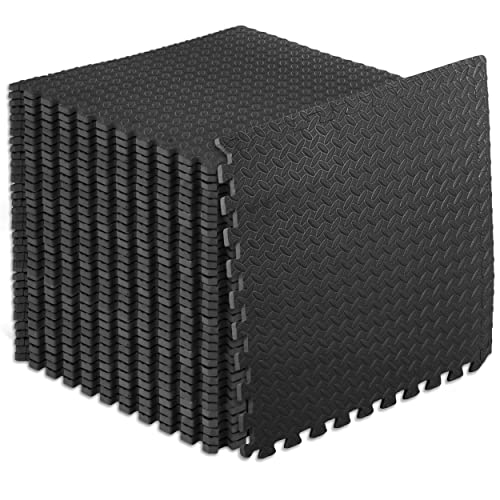
These ½-inch EVA foam interlocking tiles form a cushioned base ideal for a basement gym. The tiles are durable, water-resistant, and easy to clean, making them suitable for exercise spaces and kids’ play areas. The textured surface provides a non-slip grip, while the interlocking design allows quick assembly and disassembly for storage. This set protects concrete floors from equipment weight, reduces noise, and provides a forgiving surface for floor-based exercises, jumps, and machines.
SuperJARE 0.56-Inch Thick Interlocking Mats

These mats feature an upgraded dual-layer design with a high-density EVA foam base and an EPDM rubber top. The rubber top adds durability for heavy equipment and improved traction, while the foam layer dampens impact and reduces vibrations. A notable advantage is the absence of strong rubber odor, making them suitable for indoor basements. The surface offers excellent grip to prevent slipping during movements like landmine presses, yet remains cushioned enough for deadlifts and floor exercises. They also minimize noise for adjacent living spaces.
Bemaxx Gym Mats Set—18 Pieces
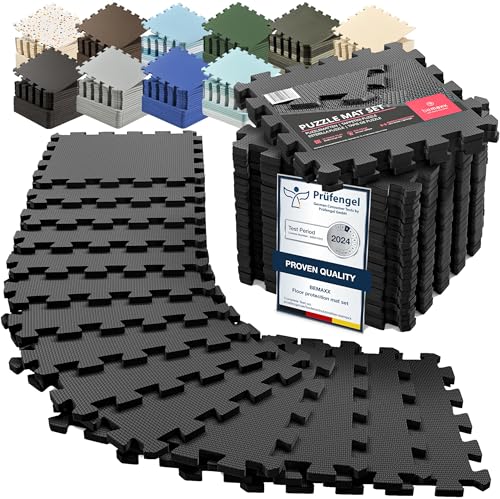
The Bemaxx set provides 18 interlocking EVA foam tiles with edge pieces for a seamless floor. The tiles are BPA-free and designed to be dusted and wiped down easily, offering a low-maintenance solution for basements. The anti-slip surface improves stability during workouts, while the foam layer dampens impact and reduces noise. This option is well-suited to home gyms that require a complete floor protection system with clean, modular installation and the ability to expand as your space grows.
ProsourceFit Extra Thick Puzzle Mat—1-Inch

This extra-thick mat provides superior cushioning with a 1-inch thickness, making it a strong choice for heavy lifting and high-impact routines. The tiles are interlocking and easy to assemble, with a surface designed to handle gym equipment and daily use. They help protect floors from equipment weight and reduce vibrations and noise, which is beneficial for basement living spaces. The set supports flexible layouts and is compatible with double-sided tape if you need extra grip on certain surfaces.
Nazhura Home Gym Mat—24 Tiles

The Nazhura 24-tile set offers a complete floor solution for basements, with each tile measuring 24 x 24 inches and a thickness of ½ inch. The 96-square-foot coverage is ideal for larger workout areas or shared spaces. The tiles interlock for a seamless surface, and the textured top enhances grip during routines while protecting flooring underneath. This option is suitable for both home gyms and kids’ activity areas, delivering a durable, easy-to-clean surface that can be reconfigured as space requirements change.
Buying Guide
Thickness And Cushioning
Basement gyms benefit from thicker mats when lifting heavy weights or performing plyometrics. Mats that are ¾ inch to 1 inch thick provide robust cushioning, reducing joint impact and protecting both floors and equipment. Lighter activities can be well-supported by ½-inch tiles. Consider pairing thicker mats under weight racks and benches while using thinner tiles in surrounding workout zones to optimize cost and coverage.
Area Coverage And Layout
Measure your basement floor to determine the number of tiles needed. Interlocking systems simplify alignment and allow you to tailor coverage around corners, columns, and equipment. If you have a large space, a 36-tile or more setup can create a uniform surface, while smaller areas may only require a subset. Remember that edge pieces or border tiles help create clean boundaries and prevent tripping hazards.
Interlock Design And Edges
A reliable interlock system ensures a secure fit and quick installation. Look for puzzle-piece edges and edge pieces that create a neat perimeter. Edge and corner pieces are essential for a finished look and safety, especially in high-traffic basement gyms where seams could trip you up.
Moisture Resistance And Cleaning
Bases in basements can be humid or prone to moisture. Materials like EVA foam with water-resistant properties are easier to clean and less likely to absorb spills. Wipe-down surfaces with mild cleaners to maintain hygiene, and consider mats with sealed surfaces if your area experiences higher moisture levels.
Noise And Vibration Damping
Floor mats that dampen noise are valuable in multi-story homes. Rubber-top layers or denser foams reduce impact sounds from dropped weights and equipment movement. A quieter floor enhances living comfort and may minimize neighbor disturbances, particularly in shared housing or apartment basements.
Durability And Weight Handling
Basement gym floors must withstand weight from machines, free weights, and benches. Look for high-density foams and dual-layer designs that resist tearing and compression. Rubber tops add extra durability for heavier loads, while BPA-free materials ensure safe indoor use around families and pets.
Maintenance And Longevity
Choose tiles that are easy to clean and resistant to stains, moisture, and mold. Interlocking systems reduce gaps where dirt collects, and edge pieces support long-term use in busy spaces. Regular cleaning and periodic resealing (where applicable) help extend the life of the flooring in a basement gym environment.