Best Fireplace Glass Cleaners for a Clear View
Keeping fireplace glass clean improves safety and ambiance by restoring visibility through the glass and boosting efficiency. Heat, smoke, and creosote can leave stubborn residues that dull the view and foul the air. The following cleaners are popular options for American homes, offering different strengths, formulas, and application methods. Below, five closely matched products are examined with practical notes on use, compatibility, and performance to help you choose the right one for your fireplace.
| Product | Brand | Size | Notable Feature |
|---|---|---|---|
| Rutland White Off Glass Cleaner | RUTLAND PRODUCTS | 8 Fl Oz | Removes white residue on gas fireplace glass; safe for cooktops |
| Quick N Brite Fireplace Glass Cleaner | Quick ‘n Brite | 24 oz | Kit with sponge & microfiber; removes soot and creosote |
| MEECO’S RED DEVIL 701 Woodstove Glass Cleaner | MEECO’S RED DEVIL | 16 oz (Pack of 2) | Industrial strength; ready-to-use with trigger sprayer |
| Quick ‘n Brite Fireplace Cleaning Kit | Quick ‘n Brite | 24 oz spray + 16 oz gel | All-in-one kit; includes brush and towel; safe on cold surfaces |
| Rutland Fireplace Glass And Hearth Cleaner | RUTLAND PRODUCTS | 32 oz | Ammonia-free; suitable for high-temperature glass |
Rutland White Off Glass Cleaner
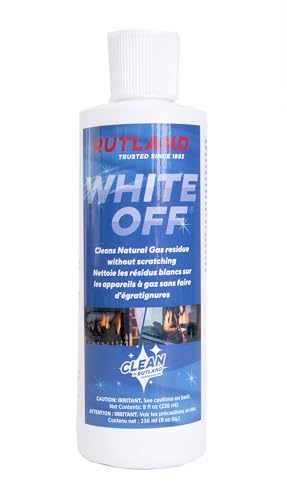
Rutland White Off Glass Cleaner is specially formulated to address white residue commonly found on gas fireplace glass doors. The product emphasizes a gentle approach, designed to remove stubborn build-up without scratching or micro-pitting, preserving the integrity of the glass surface. It is described as safe for use around other kitchen and home surfaces, including cooktops, stainless steel, and fiberglass components, which makes it a versatile choice for households with integrated hearth areas. When using this cleaner, apply according to the label directions and wipe away residue with a clean cloth. For best results, follow with a thorough dry wipe to prevent streaking and to promote a clear, glossy finish.
The formula’s focus on non-abrasive cleaning helps reduce the risk of surface damage while removing difficult films associated with gas-fired flames. It’s suitable for routine maintenance as well as periodic deep cleans following heavy use, and its compatibility with common surfaces means it can be used in nearby areas without fear of unintended damage. Users should always test a small area first to verify that the cleaner does not discolor surrounding materials. Regular cleaning can help maintain a bright, unobstructed view of the fire and extend the life of the door’s glass.
Quick N Brite Fireplace Glass Cleaner

Quick N Brite’s 24-ounce Fireplace Glass Cleaner is designed for rapid brightening and thorough cleaning of fireplace glass. The kit includes a spray bottle, a cleaning sponge, and a microfiber towel, offering a complete solution to remove creosote, smoke residue, soot, ash, dust, and carbon deposits from glass surfaces. The product claims safe performance on all glass surfaces, making it a versatile choice for multiple hearth configurations. A finger sprayer helps create even coverage, minimizing streaks during cleaning. The accompanying sponge and microfiber cloth enable a controlled, reflexive wipe that contributes to a cleaner, clearer pane after every session.
Application steps are straightforward: spray a light to medium mist across the glass, scrub with the sponge to dislodge buildup, and finish with the microfiber towel for a streak-free shine. The kit is designed for use on cool surfaces only, which helps prevent any thermal stress on hot glass and reduces the risk of cracking. Regular use can help maintain a bright, glassy appearance and improve the overall aesthetics of your fireplace presentation, especially after winter heavy usage.
MEECO’S RED DEVIL 701 Woodstove Glass Cleaner

MEECO’S RED DEVIL 701 Woodstove Glass Cleaner is marketed as an industrial-strength cleaner designed to tackle baked-on creosote, smoke, soot, and dirt that accumulate on wood stove and fireplace glass. This product is offered as a 16-ounce bottle that comes in a pack of two, ensuring ready availability for regular maintenance or larger cleaning projects. The formula is described as ready-to-use with an easy trigger sprayer, simplifying application and reducing the need for additional tools. The packaging emphasizes American manufacturing and a robust cleaning capability suitable for frequent use in demanding hearth environments.
When using a dual-pack product, users can allocate one bottle for heavy-duty seasonal cleans and the other for routine upkeep, keeping glass clear during peak heating seasons. For best results, apply evenly, allow a short dwell time if needed, and wipe with a clean cloth or pad to remove any remaining residue. As with all high-heat areas, ensure the glass has cooled before cleaning and follow label directions to minimize any risk of scratching or smearing the surface.
Quick ‘n Brite Fireplace Cleaning Kit

The Quick ‘n Brite Fireplace Cleaning Kit takes a comprehensive approach to fireplace glass maintenance. The kit includes a 24-ounce fireplace glass cleaner spray and a 16-ounce gel hearth cleaner, along with a scrub brush, sponge, and microfiber towel. This combination is designed to deliver a top-to-bottom cleaning, swiftly removing soot, creosote, ash, and other grime from glass surfaces while also addressing stubborn glaze on hearth components. The kit’s gel cleaner is particularly useful for more persistent buildup, while the spray cleaner handles general maintenance on glass surfaces across a broad range of hearth configurations.
Designed for safety and ease of use, the kit is described as safe for all glass surfaces. It includes tools that support an efficient cleaning process: the spray facilitates even coverage, the scrub brush helps dislodge stubborn residues, and the microfiber towel provides a streak-free finish. As with other products, take care to use on appropriate surfaces and follow the manufacturer’s instructions closely. The kit is especially advantageous for homeowners who want a single package that covers cleaning from top to bottom without needing additional accessories.
Rutland Hearth And Glass Cleaner

Rutland Hearth and Glass Cleaner is presented as a practical option for high-temperature glass. The 8-fluid-ounce product is described as a simple, effective formula designed to remove soot and creosote from fireplace glass, with versatility for use on a range of hearth components such as cast iron and steel doors, grates, and screens. The cleaner is promoted as ammonia-free and suitable for both indoor and outdoor use, making it a flexible choice for varying installation types. For users cleaning multiple components around a fireplace, this product offers a cohesive solution for maintaining clear glass and associated hardware.
When using this cleaner, it is important to follow safety guidelines and use appropriate protective gear if needed. The lack of ammonia makes it gentler for indoor use, reducing strong chemical odors while still delivering effective cleaning action on soot and residue. Consider pairing this cleaner with a soft cloth or non-abrasive scrubber to minimize any potential surface marks while achieving a clear, pristine glass surface and improved overall fireplace appearance.
Rutland Fireplace Glass And Hearth Cleaner

Rutland’s 32-ounce Fireplace Glass and Hearth Cleaner is described as an ammonia-free, non-abrasive option formulated to remove smoke, soot, and creosote from fireplace glass doors and related surfaces. Beyond glass, the product is marketed for use with wood stoves, cast iron, steel fireplaces, grates, and screens. The indoors-outdoors compatibility adds to its versatility for households with different installation setups. The ammonia-free formulation can be advantageous for sensitive spaces or for users seeking a milder chemical profile while still delivering effective cleaning power on high-temperature glass and metal surroundings.
For best results, apply the cleaner according to the label and wipe with a clean cloth or sponge. Allow the product to work on buildup before removing residue to minimize smearing and ensure a matte-free, clear viewing window. This option is well-suited for ongoing maintenance and seasonal cleans, particularly where soot accumulation is common during winter heat cycles.
Buying Guide
Key considerations when choosing fireplace glass cleaners
- Glass type and surface: Most cleaners target clear ceramic and tempered glass. Some can also be used on metal surfaces around the hearth without risk.
- Residue and buildup: Choose a formula designed for creosote, soot, smoke, or white residue, depending on your typical fireplace use.
- Ammonia content: Ammonia-free options are gentler for indoor use and reduce strong odors, but some ammonia-based formulas may offer stronger cleaning power for stubborn deposits.
- Ease of use: Kits with sprays, gels, brushes, or towels streamline the cleaning process and reduce the need for extra tools.
- Safety: Ensure the cleaner is suitable for cool surfaces or follow label instructions for safety and to prevent surface damage.
- Surface compatibility: Look for multi-surface compatibility if you have nearby cooktops, stainless steel, or fiberglass parts in the hearth area.
- Size and value: Larger sizes may offer better overall value for regular maintenance; consider packaging that includes accessories you’ll use.
How to choose based on your fireplace type
- Gas fireplaces: Focus on cleaners formulated to remove white residue and film without etching glass, while protecting metal components nearby.
- Wood stoves and cast iron: Look for products designed to handle baked-on creosote as well as soot on glass doors and surrounding surfaces.
- Gas vs. wood stove differences: Wood stoves may require more intensive cleaning due to creosote buildup; gas fireplaces may present lighter, residue-based challenges.
Application tips and best practices
- Always ensure the glass is cool before applying cleaner to avoid thermal shock.
- Test a small, inconspicuous area first to verify compatibility with your glass and surrounding materials.
- Follow instructions for dwell time and wiping to minimize streaks and achieve an even finish.
- Use non-abrasive tools (soft cloths, microfiber, or soft brushes) to prevent scratching.
- For stubborn buildup, reapply and allow a longer contact time, then wipe clean.
In summary, the best choice depends on your fireplace type, typical residue, and preferred cleaning method. For routine maintenance and easy results, multi-tool kits with included sponges and towels provide convenience. For stubborn buildup on wood stoves, a stronger, spray-on cleaner or a high-capacity solution may be more efficient. Ammonia-free options are often preferred for indoor spaces, reducing odors and potential fumes. Regular cleaning improves visibility, preserves glass integrity, and enhances the overall look of your fireplace area.